what the night forgot
Over the last century, firefly populations have dramatically declined worldwide due to habitat loss, light pollution, pesticides, and climate change. These once-familiar flickers of summer nights are vanishing.
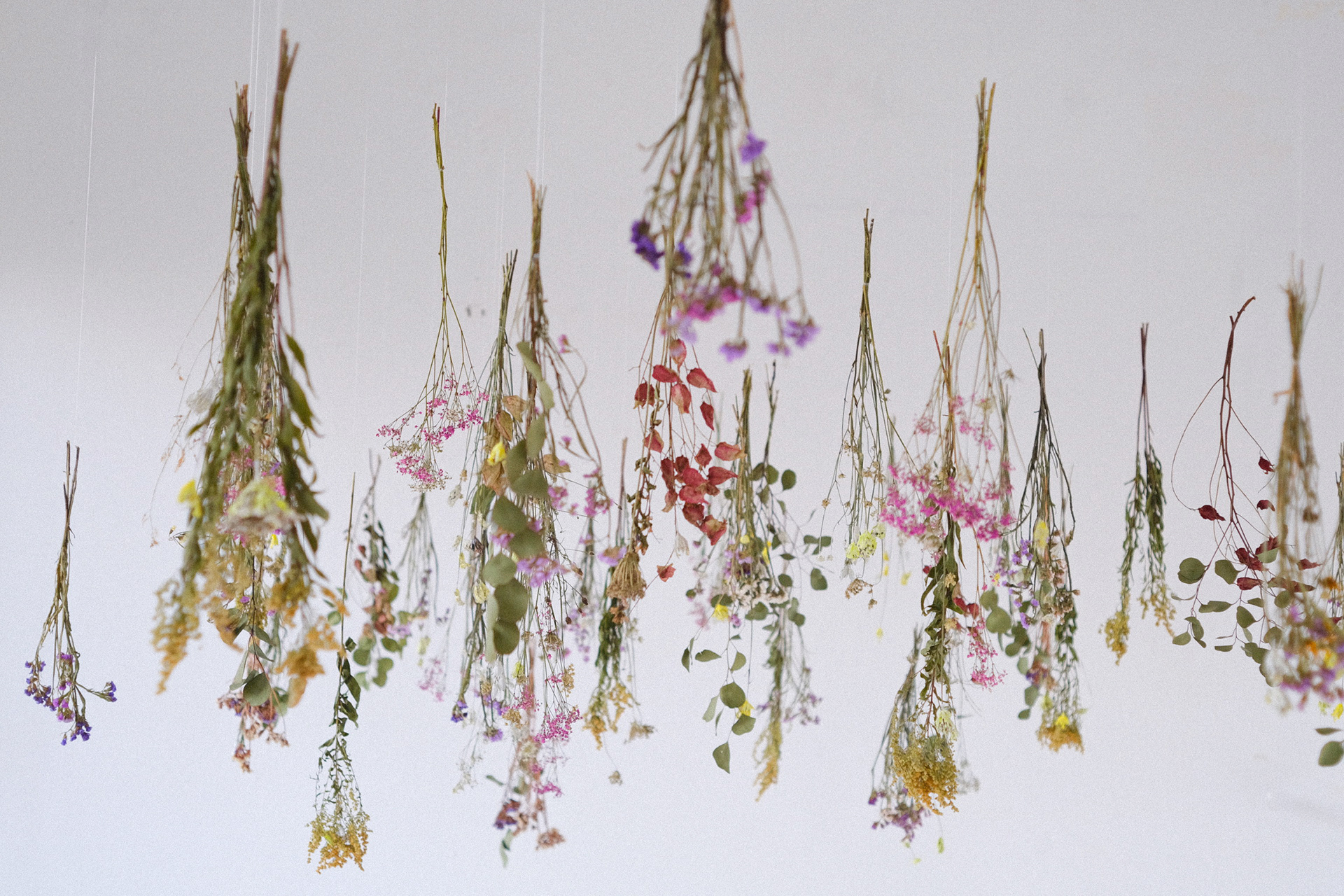
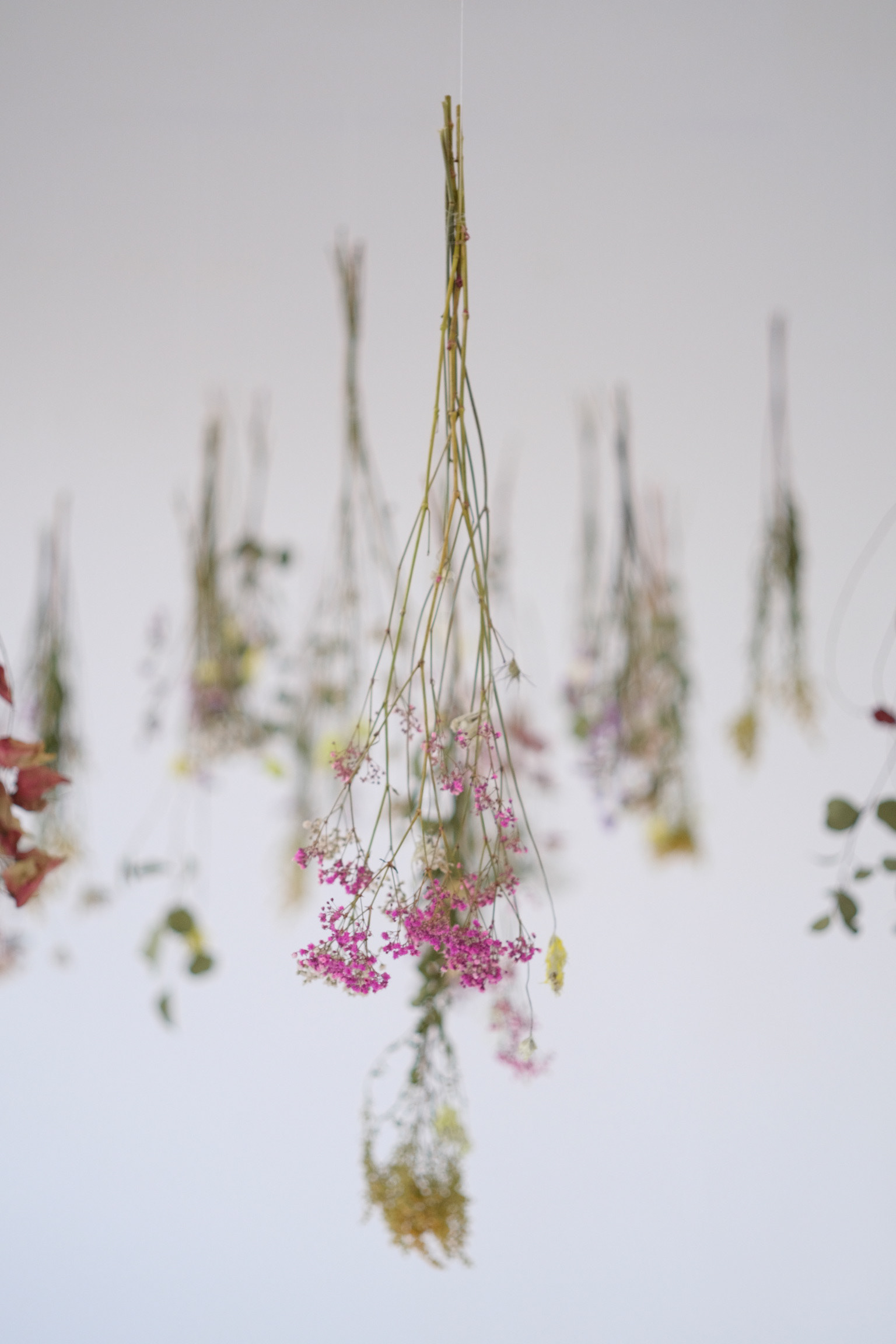
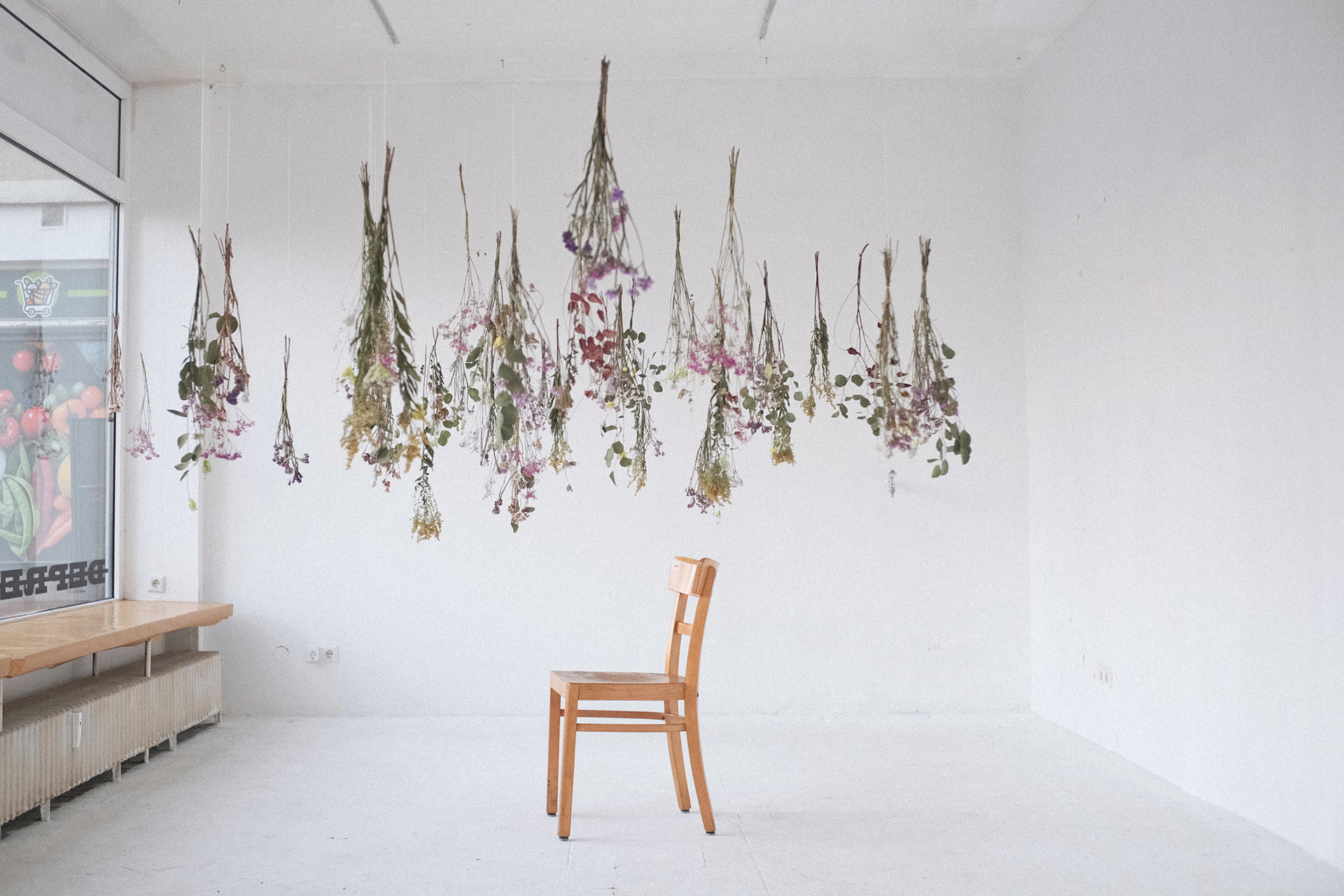
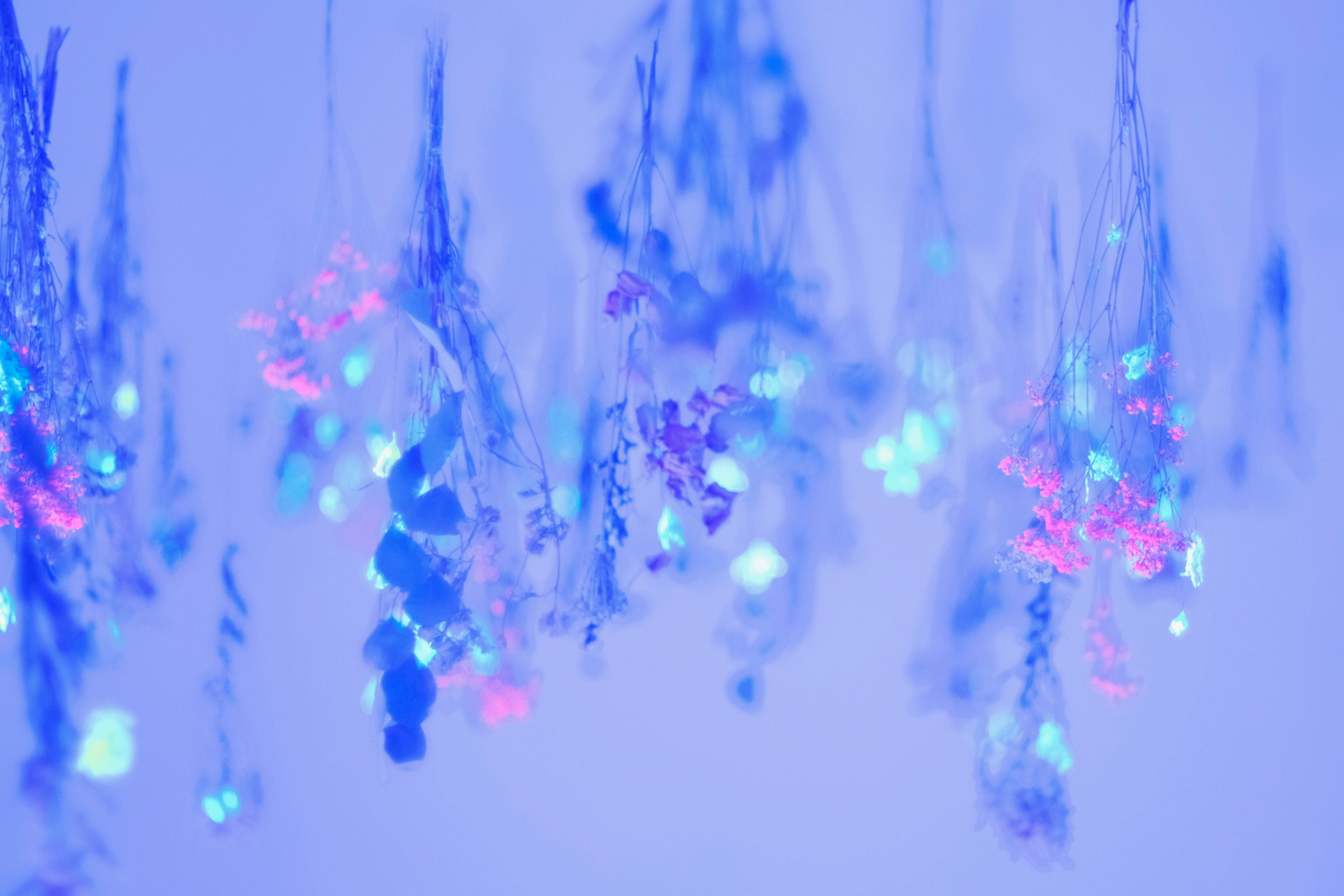
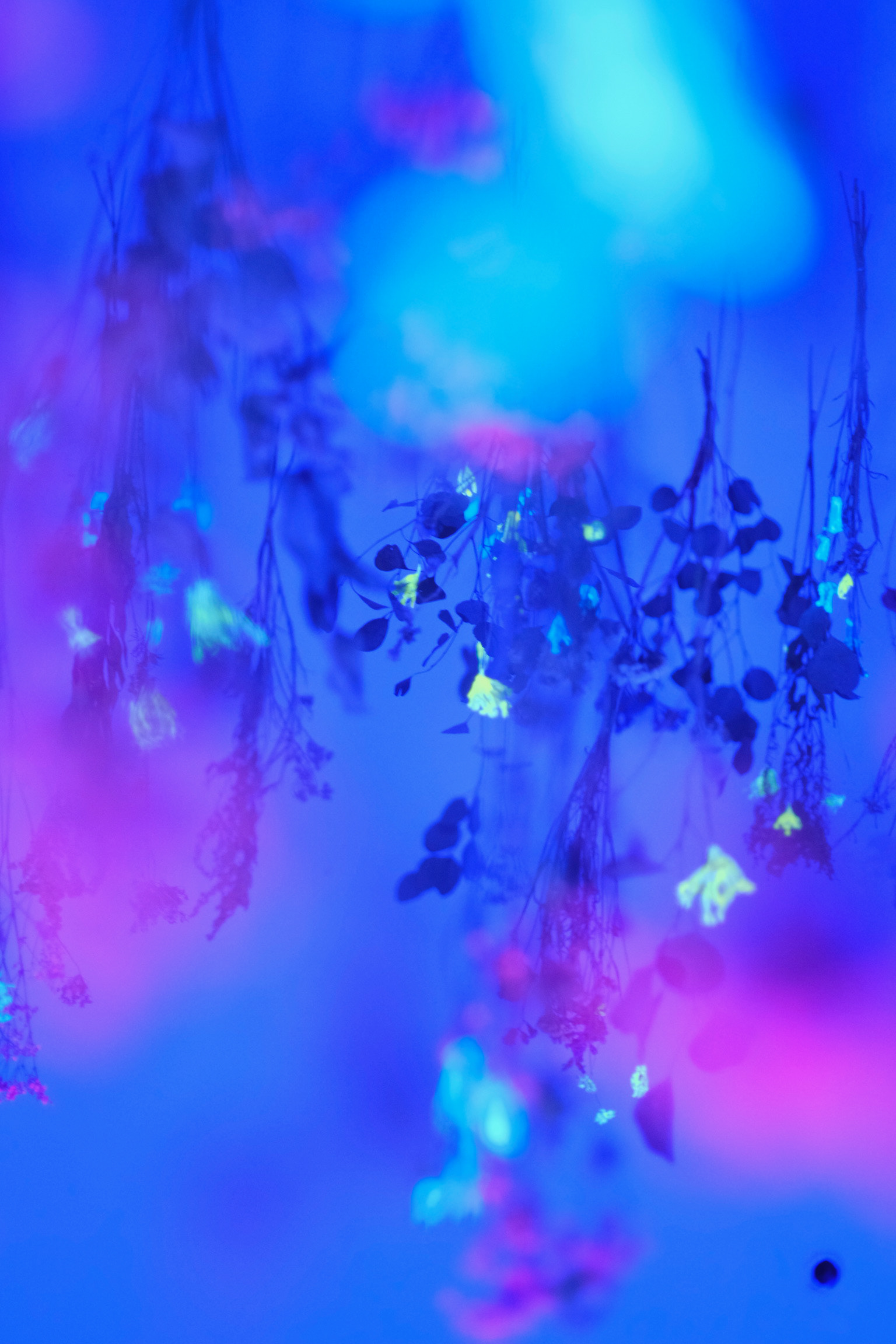
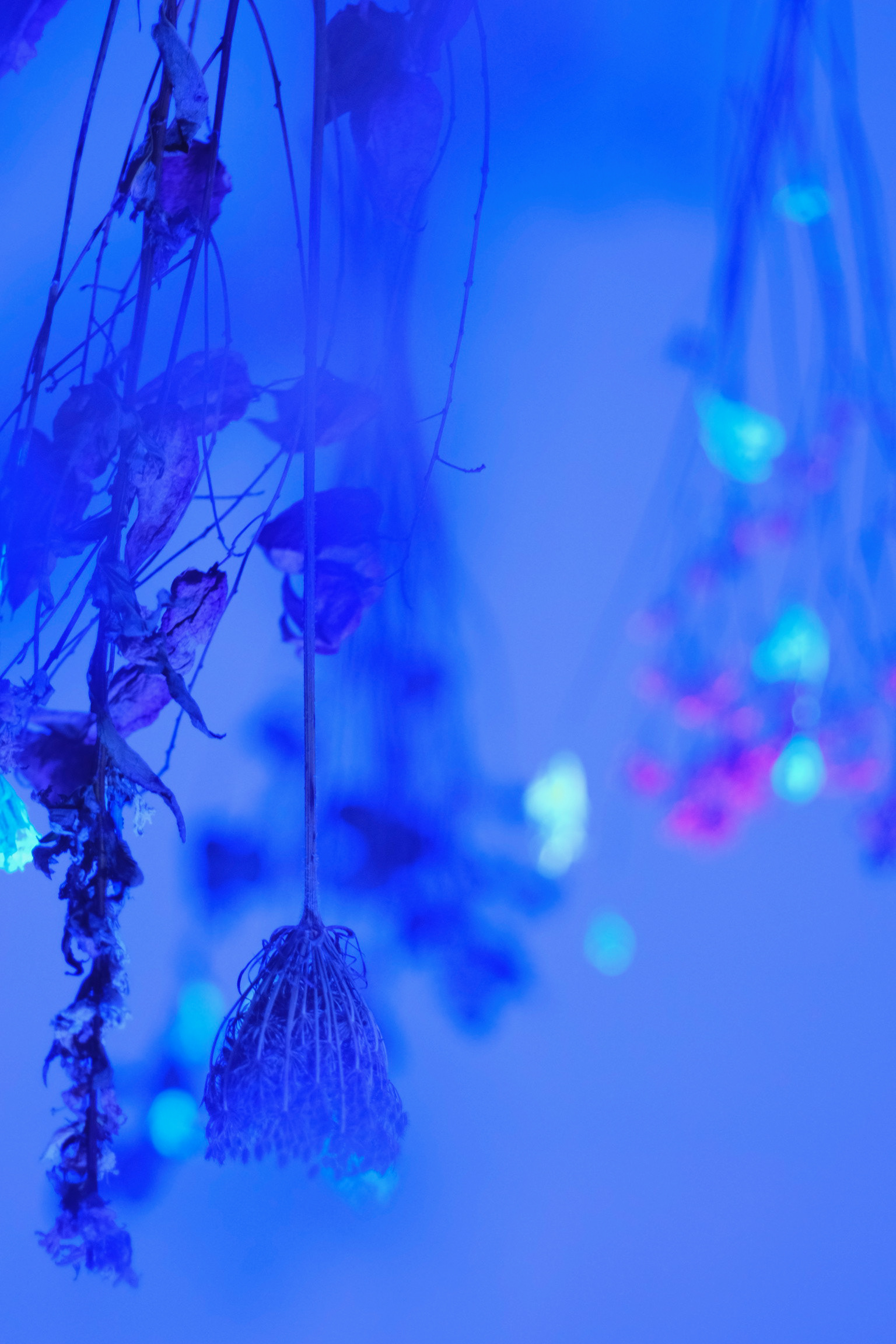
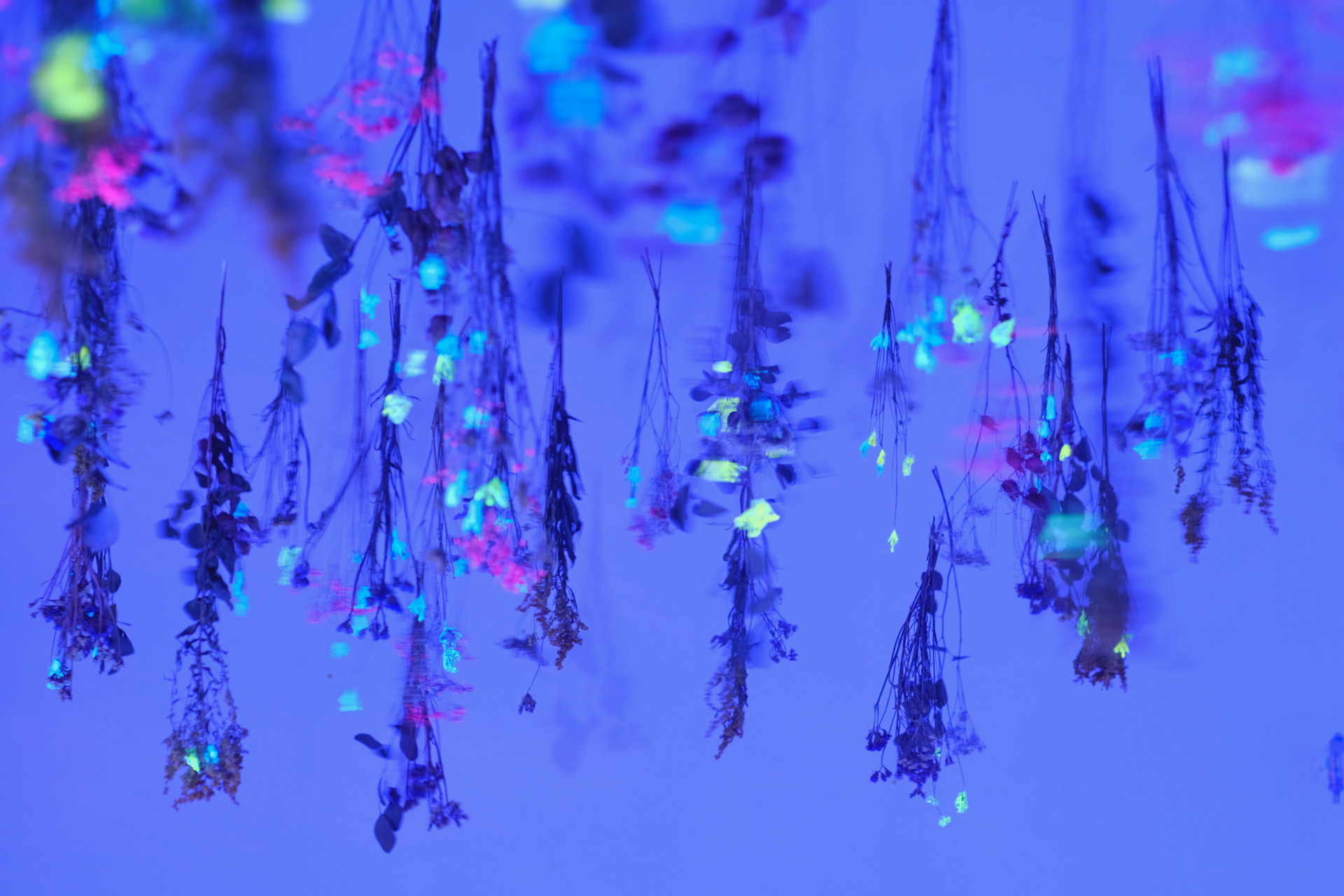
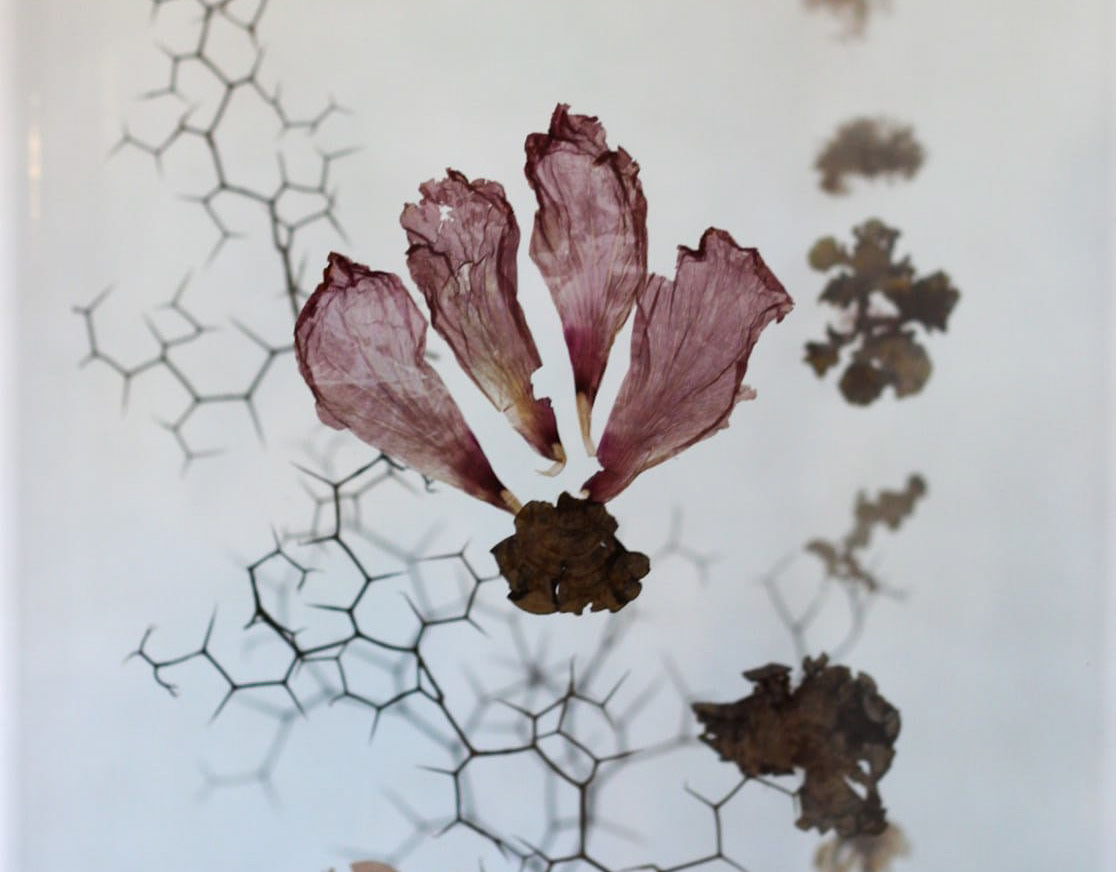
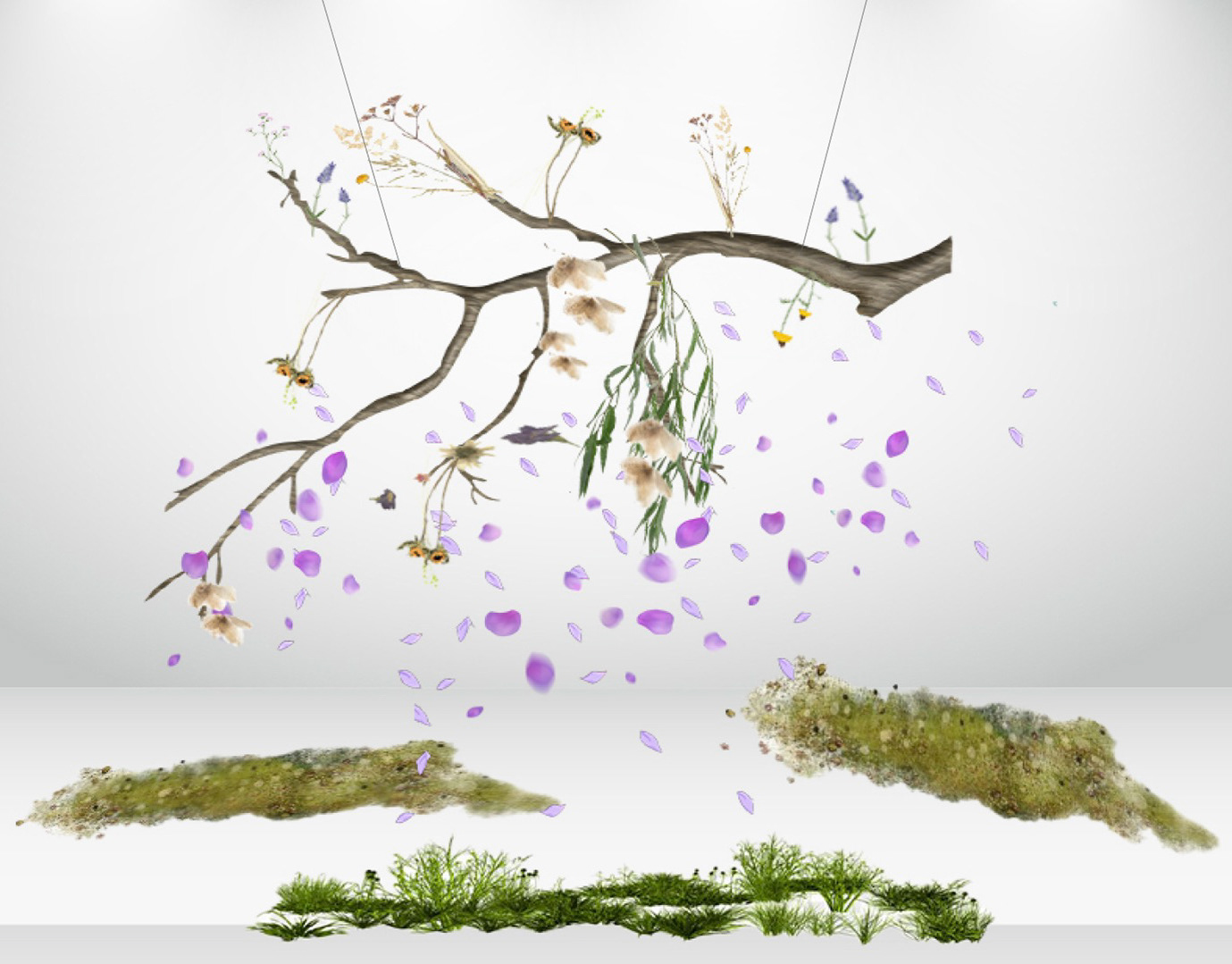
The work consists of a suspended field of dried wildflowers, hung upside down from the ceiling, an inverted meadow. By day, this composition appears as a soft, subdued relic: the natural world turned inward, disrupted, unrooted. The reversal of orientation—flowers no longer rising toward the sun but falling toward the earth—suggests a planet out of balance.
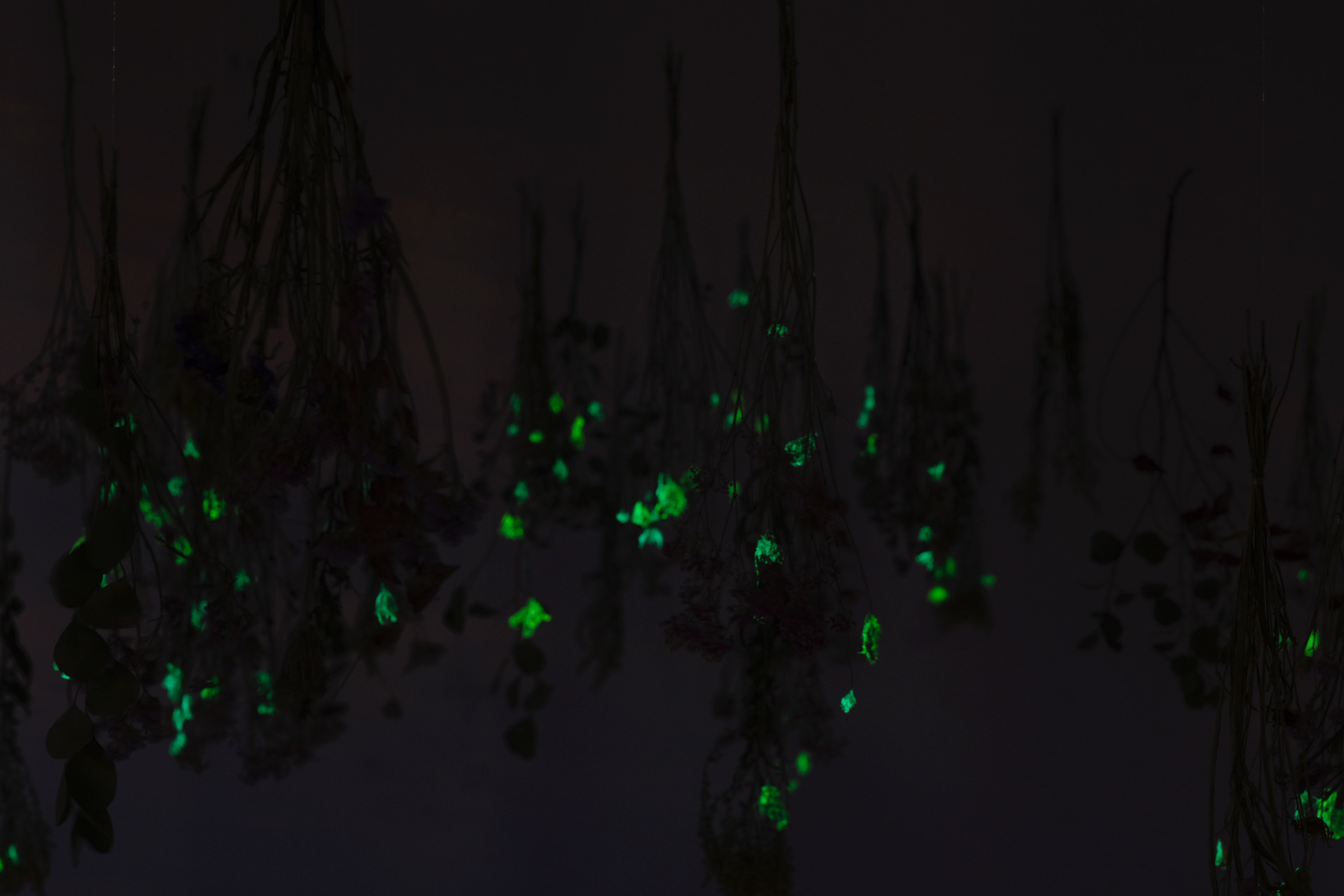
By night, the installation subtly glows. Select petals and stems, treated with light-reactive pigments, emit a gentle luminescence. This silent flicker recalls the bioluminescence of fireflies—those tiny creatures whose presence is becoming increasingly rare due to habitat destruction, light pollution, and chemical exposure.
This shift from day to night is more than a lighting effect. It marks a transformation of presence: from silence and stillness to the faint echo of life. Yet the glow is no longer alive, it is chemical, artificial, spectral.
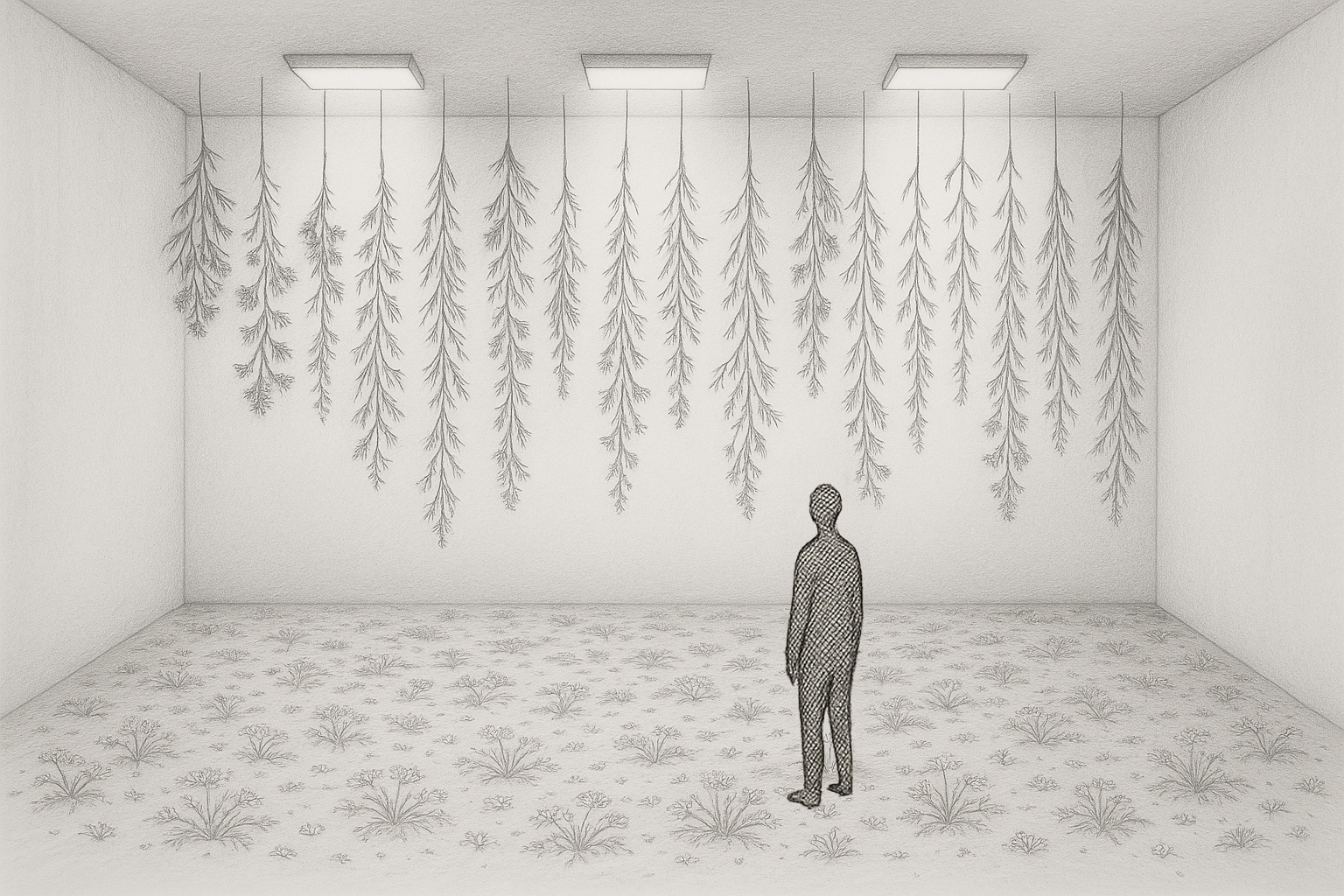
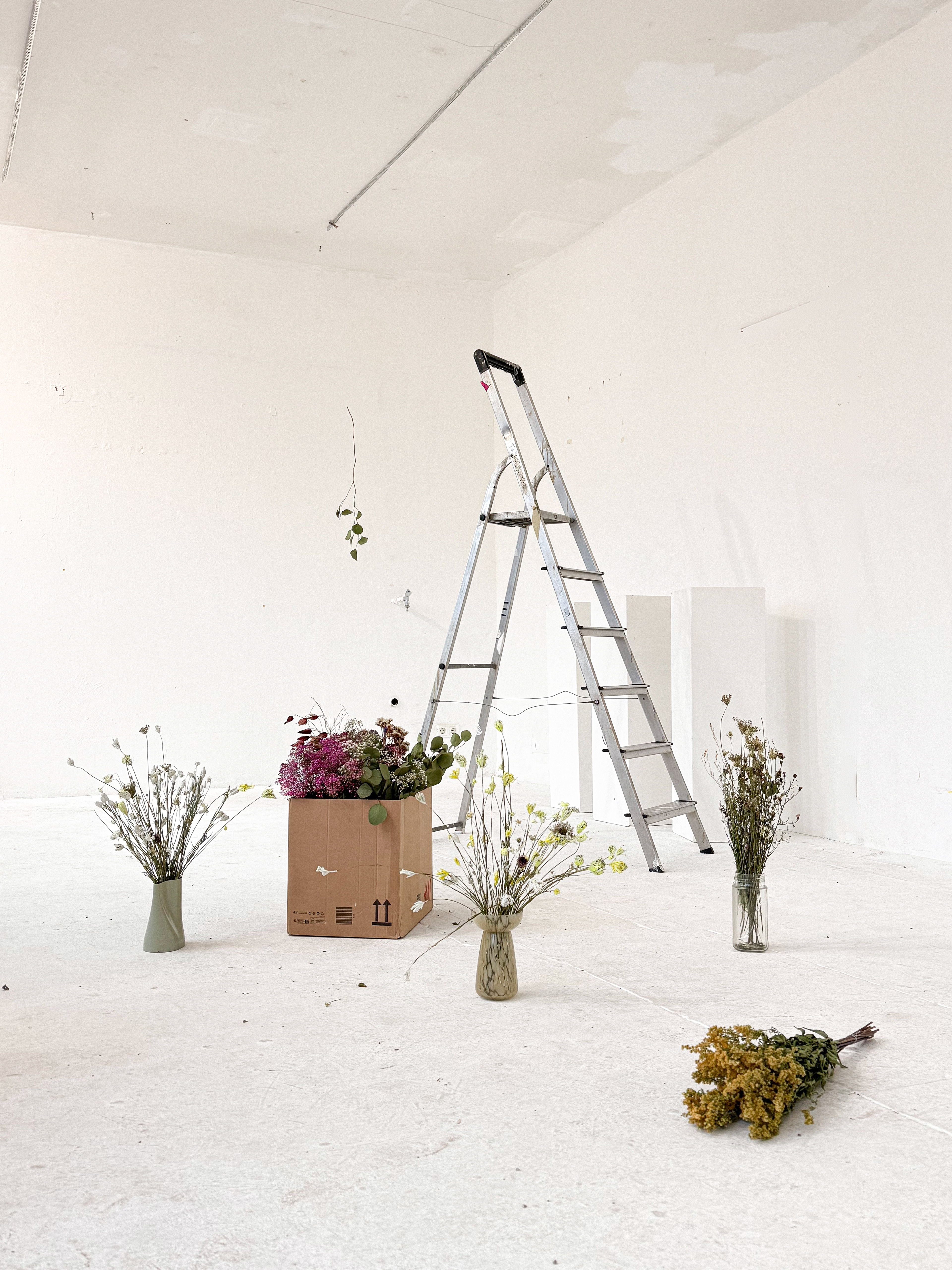
early-stage exhibition proposal sketch